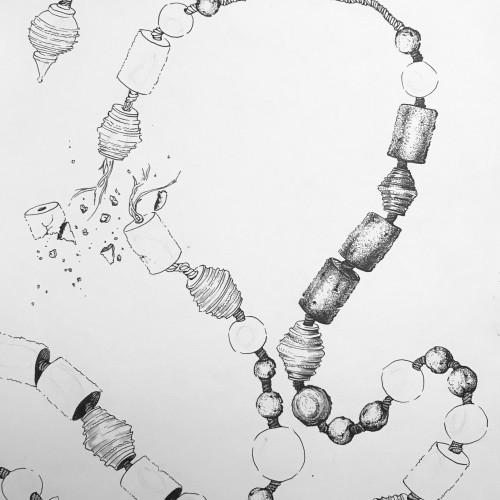
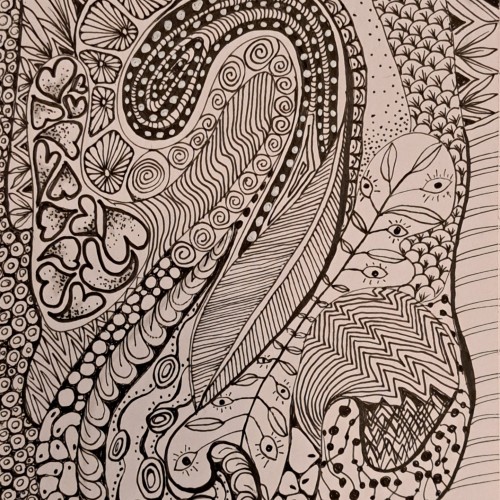
This is a drawing I have been working on when I need to slow down and turn my brain off for a little while so it's taking quite a while to finish but I am always happy to see it progress that little bit further every time I sit down with it. This is from my A3 sketchbook, I used to stick to smaller A5 and A4 sizes but I am certainly appreciating the extra space with this drawing.
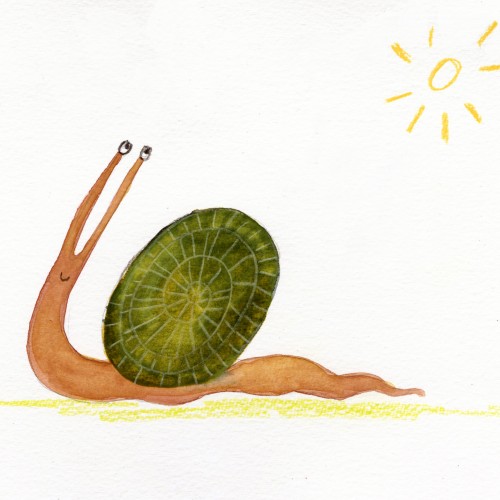
Things I learned from fairy tales.
Being first is not always good. Being second is worse.
And so, slow down and enjoy not being the fastest!
https://www.instagram.com/p/COa3tsAhAWf/?utm_source=ig_web_copy_link
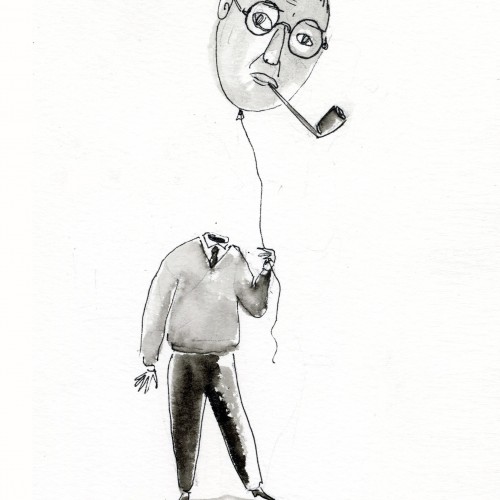
Jean-Paul Sartre (1905–1980)
By the 1950s, too much work on too little sleep—with too much wine and cigarettes—had left Sartre exhausted and on the verge of collapse. Rather than slow down, however, he turned to Corydrane, a mix of amphetamine and aspirin then fashionable among Parisian students, intellectuals, and artists (and legal in France until 1971, when it was declared toxic and taken off the market). The prescribed dose was one or two tablets in the morning and at noon. Sartre took twenty a day, beginning with his morning coffee and slowly chewing one pill after another as he worked. For each tablet, he could produce a page or two of his second major philosophical work, The Critique of Dialectical Reason.
The biographer Annie Cohen-Solal reports, “His diet over a period of twenty-four hours included two packs of cigarettes and several pipes stuffed with black tobacco, more than a quart of alcohol—wine, beer, vodka, whisky, and so on—two hundred milligrams of amphetamines, fifteen grams of aspirin, several grams of barbiturates, plus coffee, tea, rich meals.”
- From Daily Rituals: How Artists Work by Mason Currey
#dailyrituals #inktober #jeanPaulSartre @masoncurrey